
A basket of logs by the fire is one of the coziest sights in a home, but stacked straight on the floor firewood brings bark, dust, insects and damp into your living space. A proper indoor firewood rack keeps logs dry, tidy and off the floor, turns the wood pile into part of your decor, and keeps a few days of fuel within arm's reach of the stove. Below are nine indoor firewood storage ideas for every room size, plus practical advice on how much wood to keep inside, seasoning, and fire safety.
How much firewood should you store indoors?
Keep only a few days' worth of wood inside, roughly one to three days of burning, and leave the rest in your main outdoor or garage store. There are two reasons. First, firewood needs to finish seasoning outdoors with good airflow; a warm indoor room can encourage any remaining moisture to release as the wood sits. Second, a large indoor pile is more likely to bring insects and bark debris into the room. A compact indoor rack that holds a day or two of logs, topped up from your outdoor store, is the tidiest system.
9 indoor firewood storage ideas
1. Beside the stove or fireplace
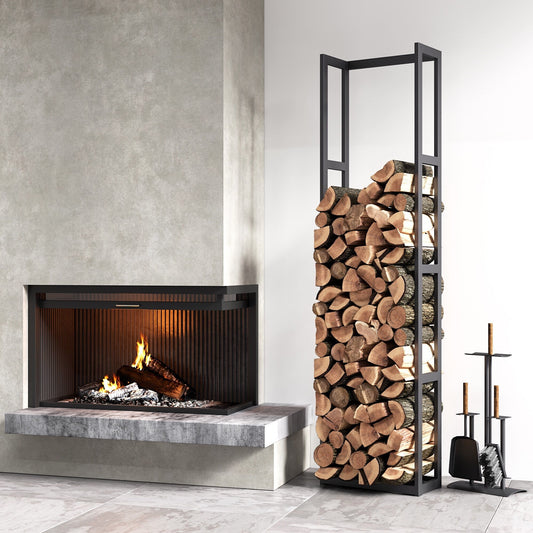
The classic placement. A freestanding steel rack set to one side of the hearth keeps logs exactly where you need them and frames the fire as a focal point. Choose a rack sized to hold a day or two of wood so it stays neat, and keep it a safe distance from the firebox (see the safety note below).

2. Wall-mounted to save floor space
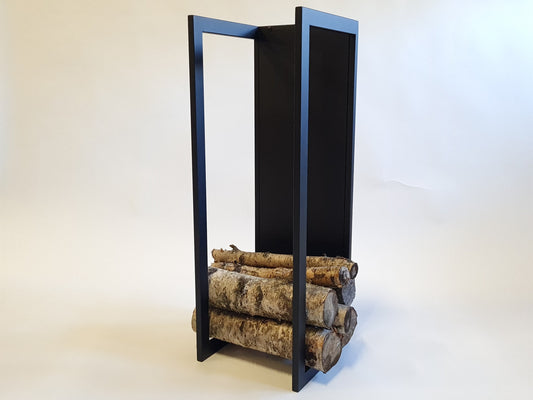
In a small living room, a wall-mounted firewood rack lifts the logs off the floor entirely and reads almost like a sculpture. Models with a backing plate protect the wall behind from bark and marks. This is the single best option when floor space is tight but you still want wood on display.

3. A vertical stack in a corner
An unused corner is prime firewood real estate. A tall vertical rack stacks logs upward in a small footprint, holding a surprising amount of wood while taking up almost no floor. It suits narrow rooms and apartments where every centimetre counts.

4. Under a console or bench
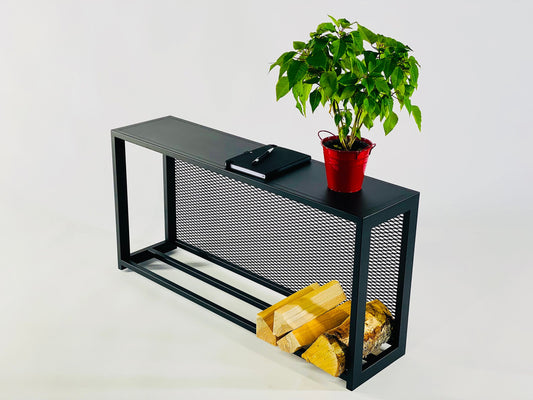
The gap beneath a console table, window bench or sideboard is often wasted. A low horizontal rack tucked underneath turns dead space into storage and keeps the logs neatly contained rather than spilling across the floor.

5. As a room divider
In an open-plan space, a tall double-sided log stack can gently separate the living area from a dining or hallway zone. The wood becomes a natural, textural partition, functional storage that also defines the room.
6. A movable rack on wheels
A rack on castors rolls from your outdoor or garage pile straight to the fireside, saving repeated trips back and forth with armfuls of logs. Mesh shelves let loose bark and debris fall through rather than collecting on your floor. Ideal if your main wood store is not in the same room as the stove.

7. In a fireplace alcove or nook
Many older homes have a recess or alcove beside the chimney breast. A rack built to sit inside that nook makes elegant use of an awkward space and keeps the wood visually integrated with the fireplace surround.
8. A hallway or entryway rack
If you carry wood in from outside, a slim rack near the entrance gives logs a place to shed outdoor debris before they travel further into the house. It also keeps a backup supply handy without cluttering the living room.
9. A garage-to-living transfer station
Keep a large-capacity rack in the garage or utility room as your indoor-adjacent buffer, holding a week or more of seasoned wood, then refill a small display rack by the fire from it. This two-rack system keeps the living room tidy while still keeping plenty of dry wood close at hand.
Seasoning and keeping wood dry indoors
Only burn seasoned wood, logs that have dried for six months to two years until their moisture content is below about 20 percent. Wet or green wood is hard to light, produces less heat, and creates more creosote in your chimney. Store the bulk of your wood outdoors under cover with airflow on all sides so it can season properly, and bring only dry, ready-to-burn logs inside. An open rack (rather than a solid box) keeps air moving around indoor logs so they stay dry.
Keeping bark, dust and insects off the floor
A rack with an open or mesh base lets bark fragments and dust fall through to one contained spot that is easy to sweep, rather than scattering across the room each time you move a log. Bringing in only small quantities at a time, and burning older logs first, also limits the chance of insects settling in. Give logs a quick knock against each other outside to shed loose bark before carrying them in.
Fire safety: clearance and placement
Keep your firewood rack a safe distance from the stove or open fire, most stove manufacturers recommend a clearance around the appliance, so position wood outside that zone and never directly against a hot surface. Do not stack logs so they can topple toward the fire, and keep the area around the hearth clear. If you have an open fire, a slightly greater distance is sensible because of sparks. When in doubt, follow the clearance guidance in your stove or fireplace manual.
Choosing the right indoor firewood rack
Match the rack to your room and how you burn. For a small space, a wall-mounted or vertical corner rack saves the most floor. For convenience, a rack on wheels cuts down trips to the wood pile. For a larger hearth, a horizontal rack holds a longer, low row of logs. Whichever style suits you, a powder-coated steel rack will not warp, rust or sag the way a wooden or wire rack can, even with damp logs sitting on it.
You can see all of these styles, wall-mounted, vertical, horizontal and movable, in our steel firewood rack collection, each handmade to order in our Riga workshop and available in custom sizes and RAL colours.
Frequently asked questions
Is it OK to store firewood inside the house?
Yes, in small quantities. Keep one to three days of seasoned, dry wood indoors on an open rack, and store the bulk outdoors under cover. Avoid keeping a large pile inside, as it can bring in insects and slow the wood's final drying.
How far should a firewood rack be from a wood stove?
Keep the rack outside the clearance zone specified in your stove or fireplace manual, and never place logs directly against a hot surface. A safe gap prevents both heat damage and accidental ignition from sparks.
What is the best indoor firewood rack for a small space?
A wall-mounted rack or a tall vertical corner rack. Both lift logs off the floor and use minimal footprint, so they suit apartments and small living rooms. A wall-mounted model with a backing plate also protects the wall behind.
Do indoor firewood racks bring bugs into the house?
The risk is low if you store only small amounts of seasoned wood indoors and burn older logs first. Choosing a rack with an open or mesh base makes it easy to sweep up any bark or debris, and knocking loose bark off logs before carrying them in helps too.
How much firewood can I keep inside?
As a guide, keep one to three days of burning indoors and refill from your outdoor store. A compact indoor rack sized for a day or two of logs keeps the room tidy while ensuring dry wood is always within reach.
Ready to tidy up your log pile? Browse our handmade steel firewood racks for indoor and outdoor storage.